
Views: 0 Author: Site Editor Publish Time: 2026-05-21 Origin: Site


Laboratory tests and hydraulic press experiments often show a surprising reality about fastening physics. The first three threads of a joint can bear up to 80% of the applied load. However, engineering reality demands much more than these theoretical minimums.
Relying solely on minimum mathematical load distribution ignores crucial real-world variables. Fasteners constantly face intense vibration, strict material shear strength limits, and fluctuating manufacturing tolerances. Without a calculated safety margin, mechanical joints risk catastrophic separation.
Determining the exact thread engagement depth requires balancing engineering priorities. We must achieve "controlled failure"—breaking the bolt before stripping the hole—while avoiding the severe manufacturing delays of over-tapping. This guide provides the exact material multipliers and calculation frameworks engineers need. You will learn how to specify accurate engagement depths and select the ideal screw tap for your specific application.
The "Break Before Strip" Rule: Joint designs must ensure the fastener reaches tensile failure before the internal threads suffer shear failure (silent failure).
Material Dictates Depth: Minimum thread engagement ranges from 1.0D (times the bolt diameter) for hardened steel up to 3.0D for engineered plastics.
Usable Threads Only: Calculations must exclude the first 1–2 imperfect threads at the fastener's tip (chamfer) and the hole's opening.
Deeper Isn't Always Stronger: Tapping deeper than necessary provides zero additional tensile strength, drastically increases drive torque, and accelerates tool wear.
Thread load distribution does not operate linearly. It acts more like a converging mathematical series. When you tighten a bolt, the very first engaged thread absorbs approximately 50% of the total clamping force. The second thread takes a fraction of the remainder. Peak load capacity levels off rapidly after four to six threads. Adding twenty more threads provides almost zero extra holding power.
We design mechanical joints for a specific outcome. The core objective is controlling how the joint eventually fails under extreme stress. We categorize this into tensile failure versus thread shear.
Tensile failure happens when the bolt stretches beyond its yield point and snaps. This is the preferred failure mode. It is predictable, visible, and safely limits maximum joint stress. Thread shear presents a completely different scenario. The internal threads strip out from the base material. This creates a sudden, catastrophic "silent failure." The joint separates instantly. It leaves no warning signs.
Engineers consistently over-engineer these depths. You cannot rely on static torque limits found in textbooks. Fasteners live in highly dynamic environments. They face severe pressure surges, sudden impact forces, and intense thermal cycling. Additionally, the first two threads are often only partially formed during manufacturing. These dynamic challenges demand a strict safety buffer. We must push engagement lengths well beyond the theoretical three-thread minimum.
Best Practice: Always design the joint so the internal thread shear area is substantially stronger than the bolt's ultimate tensile strength.
Common Mistake: Assuming perfectly formed threads exist at both the top of the hole and the tip of the fastener.
Engineers rely on established multipliers to determine safe engagement depths. We base these rules entirely on the base material's shear strength. Base material shear strength usually equals only about 60% of its ultimate tensile strength. We must compensate for this physical weakness.
Most standard steel applications require an engagement length equal to 1.0 to 1.5 times the nominal fastener diameter. We call this the 1D to 1.5D rule. A half-inch bolt going into standard steel needs roughly three-quarters of an inch of engagement depth. However, this rule changes drastically when you change materials.
As the base material gets softer, the internal threads become weaker. You must increase the engagement depth to spread the load over a larger surface area. We use the following material-specific multiplier chart to establish baselines.
Base Material Type | Minimum Engagement Multiplier |
|---|---|
Hardened Steel (Grade 5/8) | 1.0D (1.0 × Bolt Diameter) |
Low Carbon / Cold Rolled Steel | 1.2D |
Cast Iron & Hard Aluminum (e.g., 6061-T6) | 1.5D |
Soft Aluminum & Zinc Die Cast | 2.0D |
Magnesium Alloys | 2.2D |
Engineered Plastics (Nylon/PVC) | 3.0D |
You cannot ignore these distinctions. Using a 1.0D rule on a nylon component guarantees immediate strip-out under load. You must match the multiplier strictly to your specific substrate metal or plastic.
We measure engagement in two distinct dimensions: percentage and length. Length describes the physical depth the fastener travels into the hole. Percentage describes the thread crest-to-root overlap. The percentage depends heavily on the hole preparation size before the screw tap cuts the threads. Most industrial designs target a 75% thread engagement overlap. This balances peak holding strength against manageable cutting friction.
Calculating the true required length involves a rigid sequence. You must guarantee enough fully formed threads exist to carry the load.
Determine maximum tensile capability: Identify the ultimate tensile strength of the specific fastener grade you plan to use.
Identify base shear strength: Find the shear strength rating for your internal base material. Remember to calculate this at roughly 60% of its tensile rating.
Apply the multiplier: Multiply your nominal bolt diameter by the appropriate material ratio from the chart above.
Make the crucial adjustment: Add exactly 2 pitches to your final length calculation. This compensates for the bolt tip chamfer and the incomplete lead threads at the hole opening.
Skipping step four causes numerous field failures. The very end of a bolt tapers off. These tapered threads do not engage the sidewalls fully. They contribute almost zero shear resistance. You must push the bolt deeper to ensure the fully formed threads carry the required burden.
Standard calculation multipliers work perfectly for static machinery. Extreme conditions require advanced mitigation strategies. High-stress environments degrade thread integrity quickly.
High-vibration assemblies pose a unique threat. Severe vibration causes "microslip." The threads microscopically rub against each other. This gradually reduces the clamping friction holding the joint together. For high-vibration environments, engineers routinely increase engagement depth by 20% to 30%. This extra length adds friction. It helps combat the loosening effects of persistent shaking.
High-frequency maintenance joints also need extra attention. If a joint requires disassembly every month, the threads will wear down. Repeated metal-on-metal friction physically removes material from the thread crests. You should add buffer depth during the initial design phase. This ensures adequate strength remains even after hundreds of maintenance cycles.
Soft material applications demand special mitigation. Modern engine blocks use soft aluminum. Aircraft housings use lightweight magnesium. You should avoid relying solely on deep tapped holes in these metals. Tapping a magnesium block at 2.5D creates a very long, delicate internal thread. Instead, you should introduce thread inserts. Products like Helicoils install into an oversized tapped hole. They provide durable steel threads for the bolt while distributing the shear load safely across a much larger area of the soft base metal.
Many novice designers fall for the fallacy of "more is better." They assume tapping a hole twice as deep makes the joint twice as strong. This is mathematically false. Beyond a specific depth, usually 1.5D in standard steel, additional threads contribute 0% to the overall tensile strength. The bolt will simply snap before those deeper threads ever see stress.
Excessively deep holes create severe assembly hazards. Driving a fastener deep into a blind hole generates massive friction. This friction spikes the required installation torque. Technicians often snap bolts during assembly. The rotational friction becomes so high the bolt shears before its head even reaches the seating surface.
Deep tapping also ruins production efficiency. Tooling costs multiply rapidly. Tapping deep holes dramatically increases cycle times. It generates excessive chips. These chips pack tightly at the bottom of blind holes. This creates a high risk of catastrophic tap breakage.
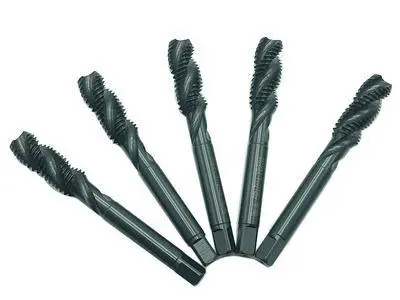
Partnering with a specialized screw tap manufacturer resolves many of these issues. They can help you select highly efficient geometries. For example, spiral flute models pull chips up and out of the hole. Spiral point models push chips forward through open holes. Selecting the right geometry allows you to evacuate chips safely without forcing engineers to design unnecessarily deep, risky holes.
Thread engagement also involves through-hole applications. We must define how many threads should protrude past a standard nut. The industry vigorously debates this "visible thread" requirement.
Evaluating conflicting specifications reveals distinct industry philosophies. The Industrial Fasteners Institute (IFI) maintains a strict stance. They require at least two full pitches protruding past the nut face. This guarantees complete engagement across every single internal thread. Structural standards differ. The AISC and RCSC often accept a flush fit. They allow the end of the bolt to sit completely level with the nut face. Highway standards offer even more leniency. The FHWA sometimes accepts only 3/4 nut engagement for specific embedded anchor bolts.
Our engineering verdict focuses on avoiding extremes. Excessive stick-out introduces severe risks. If the bolt protrudes too far, the nut might run into the "thread run-out" zone. This is the unthreaded shank portion of the bolt. Hitting this zone stops the nut from turning. It prevents the joint from generating proper clamping force.
Conversely, insufficient protrusion places the shear plane in the weakest part of the joint. You must ensure enough threads exist to fully support the nut's internal shear area. Aim for one to two visible threads. This strikes the perfect balance between guaranteed engagement and avoiding run-out zones.
Proper thread engagement relies entirely on calculated precision. It is never a guessing game. By prioritizing controlled failure principles, you protect critical assemblies from unpredictable, catastrophic strip-outs.
Lock in your minimum engagement depths strictly between 1.0D and 3.0D based on the base material's shear limitations.
Always factor in the crucial 2-pitch rule to compensate for fastener tip chamfers and incomplete lead threads.
Avoid over-tapping. Deep threads provide zero added tensile strength while risking high drive torque and snapped fasteners.
Work closely with tooling suppliers. Ensure your hole preparation yields exactly 75% thread engagement for optimal reliability.
A: Most industrial applications target 75% thread engagement. This specific overlap offers the optimal balance between peak holding strength and manageable tapping torque during manufacturing. Pushing beyond 75% drastically increases tool wear without significantly improving the joint's shear resistance.
A: Yes. Because fine threads feature a shallower physical depth and smaller shear area per pitch, they engage differently. They often require more rotations—typically 8 to 10 threads—to achieve the same shear strength as 6 coarse threads. However, their overall physical length of engagement remains quite similar.
A: No. Aluminum possesses a much lower internal shear strength than steel. Using a 1.5D rule in soft aluminum risks catastrophic thread shear under heavy loads. Engineers must use a 2.0D to 2.5D multiplier for soft aluminum or implement hardened thread inserts.


