
Views: 0 Author: Site Editor Publish Time: 2026-03-17 Origin: Site


Many tooling problems are blamed on product quality, but the real cause is often a mismatch between the insert and the job. Buyers who need to choose the right milling insert usually want a practical way to avoid chipping, unstable cutting, short tool life, and wasted cost. For NeK customers, the most effective approach is to start with the actual machining task and narrow the options by material, operation, setup, and performance target.
Material comes first because different metals require different insert behavior. Steel often needs a balance of wear resistance and toughness. Stainless steel tends to create more heat and may need a freer-cutting edge. Cast iron is more abrasive, so wear resistance matters more. Non-ferrous materials often benefit from sharper cutting action and smoother chip flow.
This is why the insert should never be chosen by size or price alone. A good insert is one that matches the material well enough to cut consistently and predictably.
The next question is the operation. Face milling, shoulder milling, slotting, contouring, and finishing all place different demands on the insert. Face milling often focuses on smooth cutting and stable surface generation. Shoulder milling puts more pressure on the corner. Slotting makes chip evacuation more important. Finishing needs better edge consistency and surface quality.
The operation tells you what the insert needs to do. Once that is clear, geometry and grade become much easier to compare.
Geometry changes how the insert cuts. A more positive cutting action usually lowers cutting force and feels freer in the cut. This can help when the machine is lighter or the material is harder to machine smoothly. A more negative cutting style gives stronger edge support and is often better for heavier, more stable cutting.
Neither option is automatically better. The correct choice depends on whether the job needs lower cutting force or stronger edge support.
Insert shape affects corner strength, reach, and stability. Some shapes are stronger and better for heavier cuts, while others provide better access to part features. A stronger corner helps in shoulder milling and interrupted cuts, but too much focus on strength can make the insert less smooth-cutting where a lighter edge would work better.
That is why insert shape should be chosen according to the part and the cut, not just the cutter pocket size.
Milling is an interrupted cutting process. The insert enters and leaves the cut repeatedly, which creates impact and thermal stress. Because of this, edge strength matters a lot. If the edge is too weak, it may chip early. If it is too heavy, cutting force may rise and finish may suffer.
A good milling insert balances sharpness and toughness according to the job. This is one of the main reasons two inserts that look similar can perform very differently in production.
Machining Condition | Insert Preference | Why | Common Mistake |
Face milling | Stable, smoother-cutting geometry | Better finish and consistency | Choosing only by price |
Shoulder milling | Stronger corner support | Helps resist chipping | Using a weak edge |
Slotting | Balanced strength and chip flow | Improves stability | Ignoring chip evacuation |
Finishing | Cleaner cutting edge | Better surface quality | Using an overly heavy edge |
Less rigid setup | More forgiving cutting action | Reduces cutting force | Using aggressive geometry |
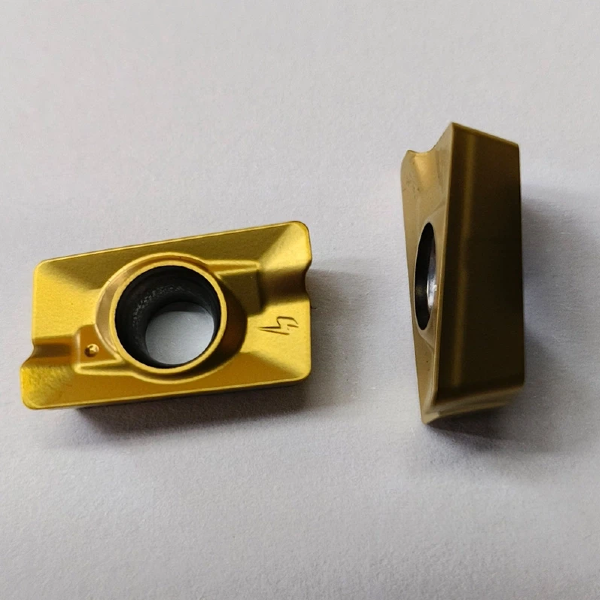
Grade is the base of insert performance. It affects wear resistance, toughness, and overall reliability. If the grade is poorly matched, even a good insert shape may still wear too quickly or fail before reaching useful tool life.
For buyers, the practical point is simple: the insert must not only cut well at the start, it must keep performing through the required number of parts.
Coating helps control heat, friction, and wear. The right coating can improve stability and extend insert life, especially in repeated production. Buyers do not need to compare every technical code, but they should understand that coating is part of the insert’s working behavior, not just a surface detail.
In many cases, the best option is the insert that gives balanced, dependable performance rather than the one that sounds the most advanced.
Insert performance depends on the whole cutting system. A correct insert may still perform poorly if the holder is unstable, the cutter body is mismatched, or the machine lacks rigidity. Excessive overhang can also increase vibration and shorten tool life.
This is why setup review should always be part of insert selection. Sometimes the insert is not the real problem.
Even a good insert can fail if cutting parameters are unrealistic. Feed, speed, and depth of cut all need to suit the insert, material, and machine condition. If the settings are too aggressive, wear increases quickly and cutting stability drops.
A balanced process often delivers better cost per part than pushing for maximum output with the wrong conditions.
The lowest purchase price does not always mean the lowest real cost. Insert value should be judged by tool life, predictable wear, and cost per part. When wear is stable, insert changes are easier to plan and production becomes more controlled.
Unexpected edge failure is expensive because it causes downtime and can damage part quality.
Surface finish is another part of insert value. A cheaper insert may become more expensive if it creates rework, scrap, or unstable part quality. Good finish stability improves production consistency and reduces waste, which matters in daily machining.
A simple way to narrow the options is to ask four questions. What material are you cutting. What milling operation are you doing. How stable is the machine and setup. What matters most: tool life, finish, or productivity.
Once those answers are clear, unsuitable options can be removed quickly. Then the remaining inserts can be compared by geometry, grade, and expected performance.
At this stage, it makes sense to compare insert families that suit the application. Some inserts are better for general face milling. Some are better for shoulder cuts. Others fit broader production work where balanced cutting is the priority.
NeK offers carbide milling insert options such as WNMU080608EN, APMT1135PDER, and RPKT1204MO for different milling needs. That gives buyers a practical starting point when they want to compare inserts based on real job conditions instead of guessing.
To choose the right milling insert, buyers need to match material, operation, setup stability, and performance target together. The best insert is not simply the cheapest or the strongest-looking one. It is the insert that delivers stable cutting, predictable life, and suitable finish in the real job. NeK helps customers move from general product awareness to a more accurate application match through practical milling insert options for daily production. If you are reviewing tooling for your next project, narrow the choice step by step and focus on actual cutting conditions. A suitable RPKT1204MO or another well-matched insert can make machining more stable and more efficient. Contact us to discuss your requirements and find the right milling insert for your work.
Start with the workpiece material and the milling operation. These two factors guide the rest of the selection process.
Because geometry affects cutting force, edge strength, chip flow, and overall stability during milling.
No. A cheaper insert can increase cost per part if it causes early wear, poor finish, or more downtime.
Compare inserts based on material, operation, setup rigidity, and whether your priority is tool life, finish, or productivity.


