
Views: 0 Author: Site Editor Publish Time: 2026-05-14 Origin: Site


Thread selection goes far beyond picking a simple fastener to hold parts together. It actively dictates assembly speed, load-bearing capacity, sealing integrity, and the lifespan of your machining tools. Specifying the wrong thread profile often leads to catastrophic joint failure. It can also cause premature component wear or hazardous fluid leaks. Engineers and procurement teams must therefore understand exactly how specific thread geometries drive real-world manufacturing outcomes.
This guide skips basic definitions to dive directly into advanced categorization. You will learn how to evaluate and tool up for the three fundamental thread classifications: Fastening, Piping, and Power Transmission. We will explore how standardized geometry impacts production. We will also help you match your specific design requirements with the correct tooling to prevent costly field failures. By mastering these mechanical mandates, your team can optimize both product reliability and factory floor efficiency.
The three basic thread types are categorized by function: Fastening (Mounting) threads, Pipe (Sealing) threads, and Power Transmission threads.
Coarse vs. Fine thread selection directly impacts tensile strength, susceptibility to vibration loosening, and tooling wear rates.
Tapered pipe threads (NPT/BSPT) require distinct sealing methodologies compared to parallel threads, making cross-compatibility impossible.
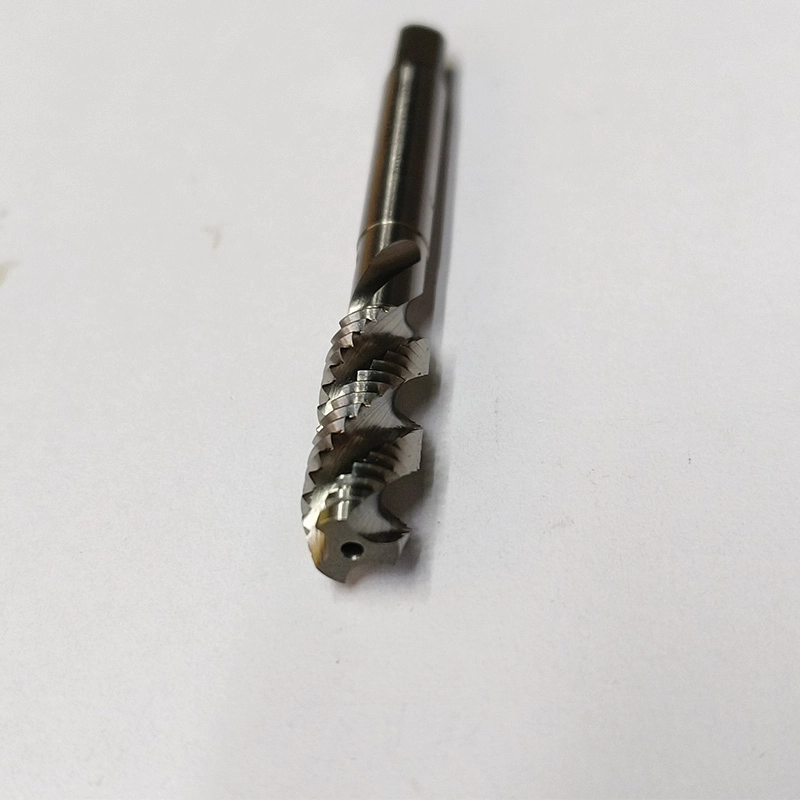
Achieving precise thread tolerances requires evaluating tooling longevity and selecting a proven screw tap manufacturer capable of delivering standard-compliant (ISO/UTS) cutting or forming tools.
Often, novice designers group threads by regional standards. They might simply compare Metric to Imperial measurements. However, industrial applications demand a different approach. We categorize threads by their primary mechanical function instead. This functional hierarchy dictates the physical geometry of the profile. It also determines the specific manufacturing processes required to produce them reliably at scale.
Let us explore the three primary functional categories driving modern engineering:
Category 1: Fastening/Mounting Threads (V-Threads): Engineers design these profiles to hold components together securely. They handle both static and dynamic loads effectively. Common examples include ISO Metric and Unified National (UN) standards. They feature an angled V-shape to maximize grip and frictional locking.
Category 2: Pipe/Sealing Threads: These threads are engineered specifically to transport fluids and gases under pressure. They often require self-sealing geometries to prevent leaks. Standard examples include National Pipe Taper (NPT) and British Standard Pipe (BSP).
Category 3: Power Transmission Threads: These robust profiles translate rotational motion into heavy-load linear movement. Traditional V-threads would easily shear under such extreme forces. Engineers rely on ACME or Trapezoidal profiles for these demanding applications.
Thread Category | Primary Mechanical Function | Common Standard Examples | Typical Profile Angle |
|---|---|---|---|
Fastening (Mounting) | Securing components under load | ISO Metric, UNC/UNF | 60° |
Pipe & Sealing | Transporting pressurized fluids | NPT, BSPT, BSPP | 60° (NPT) or 55° (BSP) |
Power Transmission | Translating rotational motion | ACME, Trapezoidal | 29° (ACME) or 30° (Metric Tr) |
V-profile threads remain the undisputed industry standard for mechanical securement. They typically feature a 60-degree angle. This angle flawlessly balances clamping force alongside ease of manufacturing. However, your most critical design decision hinges on pitch density. You must carefully choose between coarse and fine pitch variations based on the application.
Coarse threads feature fewer threads per inch or a wider distance between metric crests. They represent the default choice for most general-purpose manufacturing applications.
Advantages: They allow for rapid assembly and disassembly on the factory floor. You will find them highly tolerant of thick anti-corrosion coatings like hot-dip galvanizing. They also offer better resistance to stripping when you tap them into brittle materials like cast iron or soft plastics.
Implementation Risk: Coarse threads possess a smaller minor diameter compared to their fine counterparts. This physical reality results in a smaller cross-sectional area, leading to lower overall tensile strength. They are also much more susceptible to vibration-induced loosening over time.
Fine threads pack more crests into the exact same axial distance. They provide a shallower thread depth but leave a wider solid metal core.
Advantages: They deliver superior tensile strength due to that greater minor diameter. For example, automotive engineers specify fine threads for wheel studs to maximize torque retention. The smaller helix angle provides excellent micro-adjustment accuracy. You will also find them ideal for thin-walled components where deep threads might compromise structural integrity.
Implementation Risk: Fine threads are highly susceptible to cross-threading during manual assembly. Debris or slight impacts can easily damage the delicate crests. Furthermore, creating these precise profiles requires high-precision machining. You must utilize a strictly calibrated screw tap to prevent galling or unacceptable tolerance deviations during production.
Fluid power systems demand strict adherence to sealing standards. A single misunderstood specification can cause catastrophic pressure loss. You must evaluate your choices based on operational pressure requirements and your intended sealing methodology. Engineers generally choose between straight (parallel) and tapered designs.
Tapered Threads (NPT / BSPT):
These profiles feature a declining diameter along the threaded axis. As you tighten the fitting, this taper creates a mechanical wedge. The crests and roots crush together to form a tight joint.
Implementation Reality: Many novice technicians mistakenly believe tapered threads seal themselves entirely. They do not. You will always encounter a spiral leak path at the root-crest interface. They require PTFE tape or anaerobic sealants. These compounds fill the microscopic voids to achieve a true fluid-tight seal.
Parallel Threads (BSPP / Straight NPT):
These threads maintain a constant, straight diameter from end to end. They do not wedge together. Instead, they rely exclusively on an external sealing mechanism.
Common Sealing Methods: You will typically use O-rings, bonded seals, or crush washers. The parallel threads merely hold the fitting in place. The compressed external elastomer does the actual sealing work.
Compliance Warning:
You must pay strict attention to regional standard incompatibilities. BSP threads utilize a 55-degree angle alongside rounded crests. NPT threads use a 60-degree angle paired with flattened crests. They are physically incompatible. Forcing a BSP fitting into an NPT port causes immediate thread galling. This mistake leads to inevitable joint failure and costly equipment damage.
Some mechanical systems do not merely hold parts together. They actively move them. You will find power transmission threads in lead screws, scissor jacks, and heavy-duty linear actuators. Traditional 60-degree V-threads would fail rapidly under the immense shear stress generated by these dynamic applications.
Trapezoidal & ACME Profiles:
Engineers replace V-threads with broader, more robust geometries for motion control. ACME threads represent the standard across North America. They feature a 29-degree thread angle. Trapezoidal threads serve as the international metric equivalent. They utilize a slightly different 30-degree angle. Both profiles feature incredibly broad root bases. This thick base safely handles severe lateral forces without snapping. You will routinely spot these profiles on the Z-axis of CNC milling machines or industrial presses.
Tooling Considerations:
Machining these deep, wide profiles introduces extreme manufacturing hurdles. The aggressive cutting process generates significant heat. Chip evacuation becomes a major operational challenge. Standard high-speed steel (HSS) hand taps will quickly fail or bind inside the hole. You must use specialized rigid tapping equipment. Operators often employ tandem taps or multi-pass strategies to cut these massive profiles safely and accurately.
Specifying a brilliant thread profile on a CAD drawing is only half the battle. Producing that thread consistently at scale requires strategic tooling partnerships. High-volume production environments demand exceptional reliability. A slight degradation in your cutting tools will trigger widespread quality control failures.
Evaluate your tooling suppliers across the following strict dimensions:
Material & Coating Match: You must evaluate if the manufacturer offers application-specific coatings. Tapping stainless steel or titanium generates immense friction. Titanium Nitride (TiN) or Titanium Carbonitride (TiCN) coatings prevent edge buildup. They drastically extend tool life and ensure consistent cuts.
Forming vs. Cutting Taps: Assess whether the supplier can provide roll or forming taps. These specialized tools generate threads without producing chips. They cold-work the metal in ductile materials like aluminum or low-carbon steel. This process compresses the grain structure, significantly increasing the final thread strength.
Tolerance Verification: Ensure your chosen screw tap manufacturer guarantees strict compliance with international fit classes. They must accurately hit targets like 2B/3B for UTS or 6H for ISO standards. Failing to meet these microscopic tolerances leads to costly part rejections and assembly line delays.
Next-Step Actions: Do not rely on basic catalog specifications alone. Audit potential suppliers directly. Ask for verifiable tool life data based on your specific workpiece material. Also, verify their engineering capacity to provide custom pitch geometries if your proprietary assemblies demand non-standard dimensions.
Field engineers face a harsh reality every day. They often need to reverse-engineer or replace existing threads without any original documentation. Guessing leads to stripped parts and extended downtime. You must follow a systematic approach to identify threads accurately.
Here is a standardized, actionable framework for reliable field identification:
Step 1: Check for Taper. Never assume a pipe thread is parallel. Use digital calipers to measure the crest diameter at the very front of the thread. Then, measure the diameter at the rear. If the diameter noticeably changes, you are dealing with a pipe or tapered thread.
Step 2: Determine the Pitch. Grab a dedicated pitch gauge. Place the gauge firmly against the threads. Always perform this step against a high-contrast white background. The light shining through the gaps will reveal mismatches clearly. Find the exact millimeters between crests for Metric profiles. Find the precise Threads Per Inch (TPI) for Imperial profiles.
Step 3: Measure the Major Diameter. Use your caliper to measure the outside diameter of a male thread. For a female thread, measure the inside diameter. Take this raw measurement and cross-reference it with standard nominal size charts. Remember that actual physical dimensions often differ slightly from the nominal callout.
Step 4: Standardize the Callout. You must document your findings using strict industrial nomenclature. Proper formatting ensures procurement accuracy. Write it out clearly to prevent vendor confusion.
Thread System | Example Callout | Breakdown of Nomenclature Components |
|---|---|---|
Unified (UTS) | 1/4-20 UNC-2A | 1/4" OD, 20 TPI, Coarse, Class 2 Fit, External (A) |
ISO Metric | M8 x 1.25 - 6g | 8mm OD, 1.25mm Pitch, Class 6g Tolerance, External |
National Pipe | 3/8-18 NPT | 3/8" Nominal Size, 18 TPI, Tapered Pipe Geometry |
The core thread types—Fastening, Pipe, and Power Transmission—serve highly distinct mechanical mandates. Specific geometries strictly govern these applications. You use 60-degree V-shapes for strong clamping force. You use declining tapers for wedged pressure sealing. You rely on broad trapezoids for heavy linear motion. Knowing these fundamental differences prevents catastrophic mechanical failures and optimizes assembly times.
Successful implementation requires moving far beyond theoretical selection. You must pivot directly toward practical tooling evaluation. Assessing thread class requirements, material hardness, and production volume will dictate your tooling strategy. Ultimately, aligning your precise design parameters with capable manufacturing partners will determine the long-term success of your production run.
A: No. Tapered threads seal via metal-to-metal wedging and thread sealants. O-rings require a flat, parallel surface (like BSPP or SAE straight threads) to compress effectively.
A: Galling (cold welding) occurs under high friction, primarily when fastening identical materials like stainless steel or aluminum. Prevent it by using dissimilar metals, specialized anti-seize lubricants, or slower installation speeds.
A: Yes. Threads produced by forming/rolling deform the metal grain structure rather than severing it, resulting in higher shear strength and better fatigue resistance compared to threads cut by a standard tap.


