
Views: 0 Author: Site Editor Publish Time: 2026-03-03 Origin: Site


A rotating cutter may look like one complete tool, but the part that actually removes material is the milling insert. Many buyers first notice insert model numbers on a quote and only later realize that insert choice directly affects cutting stability, surface finish, tool life, and cost per part. For workshops, distributors, and end users, understanding this small component is essential. As a CNC tool supplier, NeK helps customers match the right insert to real machining tasks, so knowing what a milling insert is becomes the starting point for better tooling decisions.
A milling insert is the replaceable cutting edge mounted on a milling cutter body. The spindle rotates the cutter, the cutter holds the inserts, and the inserts contact the workpiece to remove material. That is why the insert matters so much: it is the part exposed to heat, cutting pressure, friction, and chip formation.
Milling is also different from continuous cutting. The insert repeatedly enters and exits the cut, which creates impact and thermal cycling. Because of that, a milling insert must balance sharpness with toughness. If the edge is too weak, it may chip. If it is too blunt, cutting force may rise and machining may become unstable.
Replaceable inserts make production more efficient. Instead of replacing the whole cutter when an edge wears out, the operator can index a new edge or change only the insert. This reduces downtime, simplifies maintenance, and makes tooling cost more predictable.
For repeated production, that matters a lot. Shops can keep the cutter body in service longer, manage stock more easily, and reduce interruption at the machine. That is one reason insert systems are widely used in industrial machining instead of relying only on solid cutting tools.
A CNC milling insert is used in many common operations. Face milling is one of the most typical, where the cutter passes over a surface to create flatness and improve finish. Shoulder milling is also common, especially when a part needs both a vertical wall and a flat floor.
Slotting, chamfering, contouring, and light profiling can also involve milling inserts, depending on the cutter style and the machining goal. In each case, the insert influences chip flow, cutting smoothness, and overall efficiency. The application should always guide insert selection.
Milling inserts are used on steel, stainless steel, cast iron, and selected non-ferrous materials. Each material creates different demands. Steel may require a balance of toughness and wear resistance, stainless steel often creates more heat, and cast iron can be abrasive.
These inserts are widely used in automotive, aerospace, mold work, and general manufacturing. In these industries, stable performance and reliable edge life are essential. NeK’s milling inserts are designed for this kind of production environment, where users need consistent cutting results rather than guesswork.
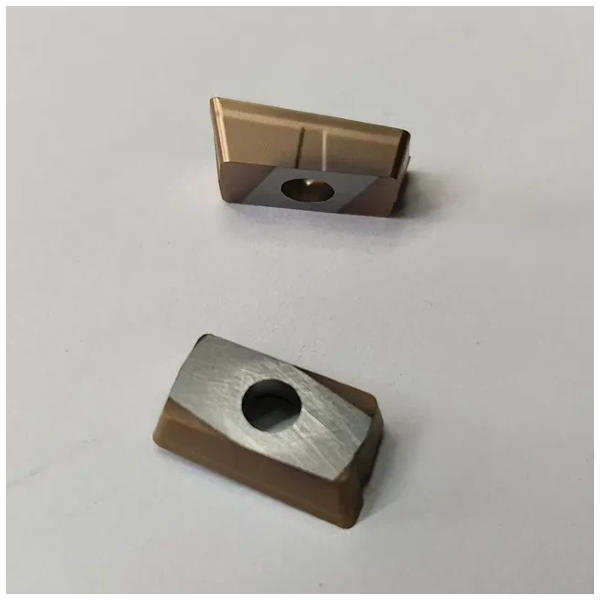
Insert shape has a strong influence on performance. Some shapes provide stronger corners for heavier cuts, while others improve access or support smoother cutting. Shape affects cutting force, corner strength, and how the tool behaves during interrupted cutting.
Edge strength is especially important in milling because the insert repeatedly strikes the workpiece. A weak edge may chip early. An overly heavy edge may create more force than the machine or setup can handle. That is why buyers should not assume that inserts with similar size will perform the same.
Chip control also matters. A good insert helps produce stable chips and smoother machining. Poor chip behavior can affect finish, heat, and process reliability.
Insert grade and coating also play a major role. The substrate provides the basic toughness and wear resistance, while the coating helps with heat control, friction reduction, and tool life.
For buyers, the practical point is simple: not all carbide inserts behave the same way. Even when two inserts look similar, their actual cutting results may differ because of grade, coating, and edge preparation. NeK offers different milling insert models such as WNMU080608EN, APMT1135PDER, and RPKT1204MO to support a wider range of machining needs.
Factor | Why It Matters | Best For | Risk If Chosen Poorly |
Insert shape | Affects strength and cutting behavior | Matching operation type | Weak corners or unstable cutting |
Edge preparation | Balances sharpness and toughness | Light or interrupted cuts | Chipping or excessive force |
Grade | Controls wear resistance | Material-specific use | Short tool life |
Coating | Helps with heat and friction | Production machining | Faster wear |
Chip control | Improves chip flow | Stable daily machining | Poor finish and chip problems |
A milling insert is often the better choice for larger cutters, repeated production, face milling, and roughing work. In these situations, quick edge replacement saves time and helps reduce tooling cost over long runs.
Insert systems are also useful when shops want more predictable maintenance and easier production planning. Instead of replacing a full tool, they can change only the worn edge and continue machining with less interruption.
Solid end mills still have advantages in small features, fine detail work, and tighter internal geometry. For delicate finishing or narrow areas, a solid tool may offer better access and control.
That does not reduce the value of milling inserts. It simply shows that insert systems are best when the job calls for productivity, replaceability, and efficient cutting on practical industrial operations.
A good milling insert should deliver stable cutting, predictable wear, and consistent edge quality. It should support acceptable surface finish and avoid random early failure under normal conditions. Just as importantly, it should match the material and the machining operation.
Reliable inserts usually show manageable wear rather than sudden edge collapse. That allows users to plan insert changes before part quality is affected. In production work, this kind of predictability is highly valuable because it improves workflow and reduces risk.
Buyers should look beyond price alone. A useful supplier should offer a practical insert range, application matching, and support for real machining conditions. NeK has long experience in the CNC tooling field and serves both terminal customers and dealer customers. The company also has its own OEM insert brands, including NeK and SHITAEGER.
That background matters because selecting an insert is not only about dimensions. Buyers need options that fit different machining tasks. NeK’s product range, including models such as WNMU080608EN, APMT1135PDER, and RPKT1204MO, gives customers more flexibility when choosing inserts for different cutter bodies and production goals.
A milling insert is the replaceable cutting edge that directly affects machining efficiency, stability, finish quality, and tool life. For buyers, understanding this product means understanding the heart of the cutting process itself. NeK supplies milling insert solutions for practical industrial applications, helping customers improve performance with better-matched tooling. If you are reviewing options for your next milling job, compare the cutting conditions carefully and choose an insert that fits the task. A suitable model such as APMT1135PDER can make daily machining more efficient and more reliable. Contact us to discuss your application and find the right insert solution.
A milling insert is used to remove material during milling operations such as face milling, shoulder milling, slotting, chamfering, and contouring. It is the cutting edge mounted on the cutter body.
Replaceable inserts reduce downtime, lower maintenance cost, and make tooling more predictable. Instead of replacing the entire cutter, users only change the worn edge.
No. Milling inserts differ in shape, grade, coating, and edge design. These factors affect tool life, cutting force, chip control, and machining stability.
Start with the workpiece material, milling operation, cutter type, and performance target. If you are unsure, NeK can help you compare insert models based on your actual machining needs.


