
Views: 0 Author: Site Editor Publish Time: 2026-03-10 Origin: Site


People searching what is CNC milling used for usually want a practical answer, not a textbook one. They want to know whether CNC milling is suitable for their parts, materials, tolerances, and production goals. In simple terms, CNC milling is used to remove material accurately and create functional part features such as flat surfaces, slots, pockets, shoulders, and contours. For customers reviewing machining solutions on the NeK website, understanding these real uses makes it easier to judge both the process and the tooling needed for reliable production.
CNC milling is used to remove material in a controlled way so a workpiece can reach the required shape, size, and surface condition. A rotating cutting tool follows programmed paths and gradually cuts away excess material. This makes it possible to machine flat faces, recessed areas, edges, and other important features with good consistency.
That is the real value of CNC milling. It turns raw stock into a usable part by creating the surfaces and structures needed for assembly, movement, or support. A single workpiece may need more than one machined feature, and milling allows these features to be produced within one coordinated process.
CNC milling remains essential because it combines flexibility and repeatability. It can be used for prototypes, small batches, and regular production. It can also handle many part forms with the right setup, making it useful for both simple and demanding jobs.
For buyers, this matters because the process is adaptable without losing consistency. A part made today can match the next one produced tomorrow, which is exactly what many manufacturers and distributors need in real business conditions.
One of the most common uses of CNC milling is creating flat surfaces. Face milling is often used when a part needs a smooth top face, a flat mounting surface, or a better final finish. This is important for assembly quality because flatness often affects alignment and part contact.
In many shops, surface milling is one of the most frequent operations because so many components need clean and controlled faces before they move to the next production stage.
CNC milling is also widely used for making slots, pockets, and shoulders. These features are common in housings, brackets, fixtures, support plates, and machine components. A slot may be needed for movement or fitting, a pocket may create space or reduce weight, and a shoulder may define a locating step or support surface.
These are practical, functional features, which is why CNC milling is so widely used in commercial manufacturing. Many parts do not look complicated, but they still depend on these milled details to work correctly.
Another important use of CNC milling is improving part readiness and final quality. Chamfering removes sharp edges and helps parts fit together more smoothly. Contouring helps create shaped surfaces, while finishing cuts improve surface condition after rough machining.
This shows that CNC milling is not only for heavy material removal. It is also used to refine the part and prepare it for assembly, inspection, or final use.
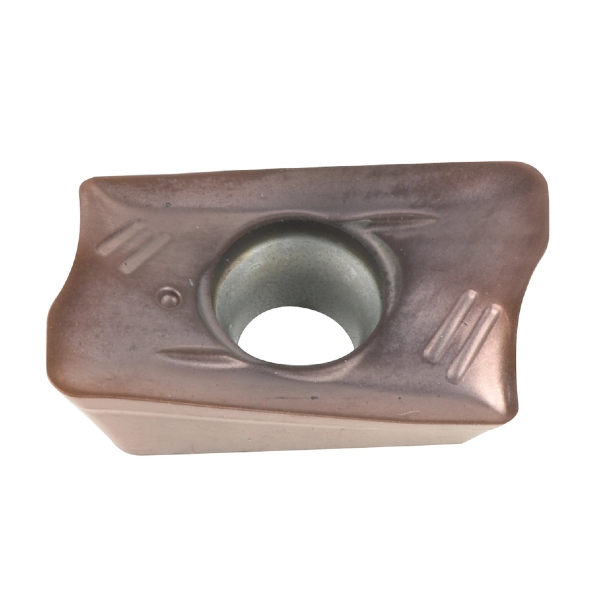
The automotive industry relies heavily on CNC milling because many parts need repeatable surfaces and accurate features. Mounting areas, structural faces, support parts, and fixture components often depend on milling. In this kind of work, consistency is critical because the same part may be produced in large numbers.
Aerospace applications also depend on CNC milling. Many parts require controlled geometry, accurate surfaces, and stable machining performance. Even when the part shape looks simple, the tolerance and material requirements can make the machining process more demanding.
General manufacturing uses CNC milling every day for brackets, machine parts, hardware components, tooling accessories, and industrial support pieces. This broad use is one reason CNC milling remains a core process across many industries, not just in high-end sectors. For NeK customers, this wide commercial relevance makes milling inserts an important product category for daily machining needs.
Part Feature | Typical Milling Operation | Why It Matters | Insert Performance Concern |
Flat surface | Face milling | Improves assembly and flatness | Finish and edge stability |
Slot | Slot milling | Creates fit or movement space | Chip evacuation |
Pocket milling | Adds internal space | Heat and cutting smoothness | |
Shoulder | Shoulder milling | Forms locating steps | Corner strength |
Chamfered edge | Chamfer milling | Improves handling and assembly | Finish consistency |
A good CNC machine alone does not guarantee efficient milling. If the insert is poorly matched to the material or operation, the result may still be chatter, weak finish, irregular wear, or short tool life. That is why insert selection matters in every application, from face milling to shoulder creation and finishing.
The right insert helps produce smoother surfaces, more stable cutting, and more predictable wear. That supports better uptime because operators spend less time dealing with unstable results or unexpected edge failure. For many routine jobs, carbide milling inserts remain a practical choice because they offer a good balance of durability, cutting efficiency, and cost control.
NeK’s milling insert solutions are relevant here because customers asking about CNC milling often need more than process knowledge. They also need inserts that fit the actual work being done in automotive, aerospace, and general manufacturing applications.
CNC milling is versatile, but it is not ideal for every feature. Straight holes are often better handled by drilling. Round external profiles may be more efficient on a lathe. Very fine finishing may call for grinding, and certain complex internal forms may be better suited to EDM.
This matters because inserts perform best when milling is the correct process for the job. If a shop tries to force a milling setup into work that belongs to another process, tool life and efficiency often suffer. Understanding process fit helps buyers choose inserts more realistically and avoid poor comparisons.
Insert selection should start with the cutting goal. Roughing usually needs stronger edge support and toughness. Semi-finishing needs balance. Finishing usually places more focus on surface quality and cutting smoothness. The process may still be CNC milling, but the insert needs are different.
Material is another key factor. Steel, stainless steel, cast iron, and non-ferrous materials all behave differently. Cutter style and machine rigidity also affect insert choice. A stable setup can support more aggressive cutting, while a weaker setup may require a more forgiving insert.
NeK offers multiple milling insert options, including WNMU080608EN, APMT1135PDER, and RPKT1204MO, so customers can compare solutions according to the type of milling work they actually perform.
The most practical answer to what is CNC milling used for is that it is used wherever accurate material removal and repeatable part features are required. From flat surfaces and slots to pockets, shoulders, and finished edges, CNC milling supports a wide range of industrial applications. Once the process is confirmed, insert choice becomes one of the biggest factors in finish quality, efficiency, and cost. NeK helps customers connect real machining tasks with suitable tooling options for daily production. If you are evaluating a milling job, matching the operation, material, and tooling carefully can make a real difference, especially with a reliable CNC milling insert solution. Contact us to discuss your application and find the right insert for your machining needs.
CNC milling is mainly used to create flat surfaces, slots, pockets, shoulders, contours, and chamfered edges by removing material in a controlled way.
No. CNC milling is suitable for prototypes, small batches, and regular production because it offers both flexibility and repeatability.
Automotive, aerospace, and general manufacturing all rely heavily on CNC milling for accurate and repeatable part features.
Because the insert directly affects cutting stability, surface finish, tool life, and production efficiency. A poor insert match can reduce the performance of even a good machine.


