
Views: 0 Author: Site Editor Publish Time: 2026-06-04 Origin: Site


Threading a 1/2" pipe fitting into a cast housing or manifold leaves zero room for error in any machine shop. Machinists know a single mistake during this operation often ruins an expensive workpiece entirely. A hole drilled too large results in compromised seal integrity and catastrophic fluid leaks under high pressure. Conversely, drilling a pilot hole too small risks snapping the tap instantly inside dense metal structures.
To directly answer the core query, a standard 1/2"-14 NPT tap requires either a 45/64" or a 23/32" drill bit. You choose between these two sizes based on your desired thread percentage and specific material hardness. This comprehensive guide breaks down precise sizing rules and optimal material selection for these tools. You will also learn the critical depth-control techniques required to prevent over-tapping these challenging tapered threads.
Primary Drill Sizes: Use 45/64" (0.7031") for tighter, precision thread engagement, or 23/32" (0.7188") for standard clearance in softer materials.
Taper Warning: NPT taps are tapered (3/4" per foot). Driving the tap too deep will oversize the top of the hole, rendering the workpiece useless.
Material Selection: Carbon steel taps are strictly for cleaning or chasing existing threads; cutting virgin metal requires High-Speed Steel (HSS) or Molybdenum-rich tool steel.
Quality Control: Sourcing tools from a verified thread tap manufacturer ensures proper ASME B94.9 compliance, reducing tool breakage and thread galling.
Machinists frequently debate between two acceptable drill sizes for 1/2" NPT applications. The choice directly dictates the final thread strength and your ease of machining. You must evaluate the workpiece material before selecting your drill bit.
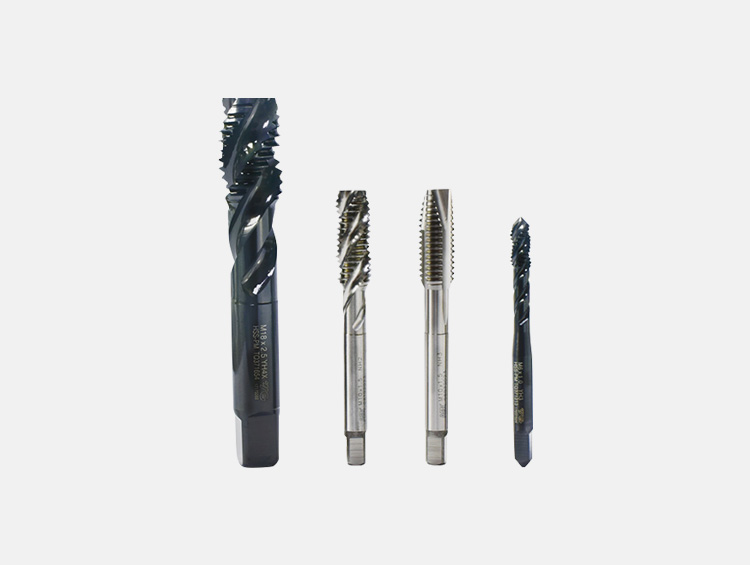
We see two primary dimensions dominate shop floor discussions. Each size serves a very distinct engineering purpose.
The 45/64" bit creates a 0.7031" pilot hole. This specific dimension provides maximum thread engagement. It yields roughly a 75 percent thread profile. Engineers demand this profile for high-pressure fluid lines. They also require it for critical pneumatic applications. Leak prevention remains mission-critical in these systems. The tighter pilot hole forces the cutting teeth deeper into the base metal. This action yields superior mechanical holding power.
Conversely, the 23/32" bit creates a 0.7188" hole. It offers a slightly larger starting cavity. Manufacturers frequently include this size in commercial tooling sets. The larger hole reduces the aggressive torque load generated during cutting. This makes the entire process much safer for manual hand-tapping. It proves especially useful in harder alloys like stainless steel. You lower the risk of tool breakage significantly. Operators often prefer this size for low-pressure cast iron or brass fittings.
Drill Bit Size | Decimal Equivalent | Best Application | Primary Advantage |
|---|---|---|---|
45/64" | 0.7031" | High-pressure systems, hydraulics | Maximum thread engagement and seal integrity |
23/32" | 0.7188" | Manual tapping, hard alloys | Reduced torque load and lower breakage risk |
Many novice operators try to take a common shortcut. They often use a standard 3/4" (0.750") drill bit when lacking the correct sizes. You must avoid this practice entirely.
A 3/4" bit is nearly 0.047" oversized for a 1/2" NPT thread. This creates a severe failure mechanism. The threads will lack enough material depth to engage properly. Even in zero-pressure applications like tractor oil return lines, this causes "oil creep". Capillary action pulls fluid through the loose mechanical gaps. You will face guaranteed chronic leakage. Always insist on the correct specification to protect your assembly.
Common Mistake: Assuming a larger hole makes tapping easier. While the tool turns easily, the resulting joint lacks the friction required to compress sealant or hold pressure.
Before drilling begins, operators must carefully confirm the exact fitting type. Tapered and straight threads require different pilot holes. They also rely on completely different sealing mechanisms.
Here are the defining characteristics of NPT (National Pipe Tapered) threads:
They require a precise 45/64" or 23/32" pilot drill bit.
They utilize a 3/4" per foot taper along the thread profile.
They rely on metal-to-metal wedging to create a primary seal.
They require PTFE tape or chemical thread sealant to fill microscopic voids.
Conversely, NPS (National Pipe Straight) threads behave differently:
They require a larger 47/64" drill bit for a standard 1/2" tap.
They rely on perfectly parallel threads from top to bottom.
They seal exclusively via an O-ring or mechanical gasket at the base.
Mixing NPT fittings into NPS tapped holes guarantees immediate failure. The tapered fitting will bind prematurely in the straight hole. It will never achieve the necessary compression for a proper seal. Always verify your prints before cutting metal.
The cost difference in tapping tools directly correlates to their metallurgical limits. Selecting the wrong material inevitably leads to snapped tools stuck inside expensive workpieces. We recommend evaluating tool specifications strictly based on your planned application.
Carbon steel taps remain cost-effective but relatively brittle. They serve the repair and maintenance sector well. Valid use cases include chasing battered threads or cleaning out old rust and sealant. You might also use them as a single-use tool in soft cast aluminum. However, do not use carbon steel to cut virgin holes in hard metals.
High-Speed Steel (HSS) taps dominate production and fabrication environments. Engineers evaluate them specifically for cutting virgin metal. They easily handle low-alloy steels and tough 300-series stainless materials. Partnering with a reliable thread tap manufacturer grants access to premium options. These specialized tools often feature Molybdenum-rich alloys. This chemistry provides much higher torsional strength. They handle the massive friction generated by tapered profiles easily. They also incorporate spiral-point geometries. This design drives chips forward and away from the cutting flutes.
Best Practice: Always match the tool's hardness to your workpiece. Never force a carbon steel tool into 304 stainless steel. The tool will shatter and ruin the casting.
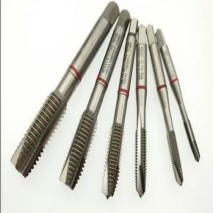
Implementation carries unique risks. Unlike cutting straight threads, a tapered hole possesses no fixed bottom limit. The final depth of your cut directly dictates the top diameter. This dynamic creates significant implementation risks for machinists.
You must follow a strict depth control process. Never run a tapered tool flush to its shank. You should stop cutting when you insert the tool about 50% to 60% of its threaded length.
Next, you must validate the cut immediately. Remove the tool carefully. Clean all loose chips from the cavity thoroughly. Packed chips will distort your measurement. Hand-thread the actual pipe fitting into your newly cut hole. The fitting should only turn about 1.5 to 2 revolutions by hand. After this point, it should require a heavy wrench to tighten further. If the fitting bottoms out by hand, the hole is over-tapped. The part is ruined. The taper is now too wide to compress the fitting.
Proper hole preparation prevents torn threads. Use a 60-degree countersink on the drilled hole before tapping. This chamfering process guides the tool perfectly perpendicular to the surface. It prevents the fragile first thread from tearing out under initial pressure.
Lubrication requires standardization across your shop floor. Use sulfurized tapping fluid aggressively when cutting steel. The fluid cools the tool and flushes abrasive chips. Upon final installation, apply a high-quality anti-seize compound. This step proves especially crucial when mixing dissimilar metals. Threading steel fittings into aluminum housings creates a battery effect. Anti-seize prevents the resulting galvanic galling and permanent seizing.
Buying taps and drills separately introduces severe tolerance stacking risks. It also opens the door to costly purchasing errors. Shop managers must evaluate their procurement options carefully.
We observe several operational advantages when using pre-matched sets:
Eliminates chart-checking errors: Operators grab a single box. They skip searching wall charts for correct decimal equivalents. This prevents accidental use of metric equivalents.
Ensures metallurgical pairing: Kits naturally match a heavy-duty HSS thread tap with a compatible 135-degree split-point cobalt drill bit. Both tools withstand identical workloads.
Streamlines tool accountability: Kits make visual inventory checks instant. Missing pieces become obvious before a shift ends. This prevents delays during critical production runs.
These organized kits keep operators focused on machining rather than hunting for compatible accessories.
Success with a 1/2" pipe tap relies entirely on strict adherence to the 45/64" or 23/32" pilot hole limits. It also requires highly disciplined depth-control during the cutting phase. Tapered profiles demand patience and frequent test fitting. Ignoring these rules guarantees leaking joints and ruined hardware.
Audit your current tooling inventory immediately.
Remove standard 3/4" bits from any NPT tapping stations.
Provide operators access to purpose-built HSS tapping tools.
Stop relying on inferior carbon steel repair tools for primary fabrication work.
A: No. Pipe sizes refer to the inner diameter of the pipe, not the thread's outer diameter. A 1/2" NPT tap has an actual outer diameter closer to 0.840", making a 1/2" drill bit far too small. Attempting this will snap your tool instantly.
A: NPTF (Dryseal) threads have modified crest and root heights designed to crush together. This creates a leak-proof mechanical seal without the need for Teflon tape or pipe dope. The pilot drill sizes generally remain the same, but the tapping precision requirements are much higher.
A: The hole was tapped too deeply. Because NPT taps have a 3/4" per foot taper, driving the tap too far widens the mouth of the hole past the tolerance of the fitting. Once the top threads widen excessively, the workpiece cannot be salvaged.


