
Views: 0 Author: Site Editor Publish Time: 2026-05-28 Origin: Site


Selecting the correct drill bit for a 1/8" pipe thread tap sparks heavy debate between engineering standard boards and shop-floor reality. You might think a single size works universally. However, actual machining environments tell a different story. ASME B1.20.1 standards strictly dictate one precise diameter. Meanwhile, veteran machinists and motorsports technicians often prefer a slightly larger alternative to prevent catastrophic equipment damage. This discrepancy leaves many operators questioning which path to follow. Why does standard engineering literature clash with real-world practice? The answer lies in the nuances of your specific project. In this article, we provide a definitive, evidence-based framework for choosing the exact drill bit size. You will learn how to base your decision on thread type—such as NPT versus NPTF—as well as base material hardness and critical sealing requirements. By the end, you will confidently know exactly when to follow the rules and when to break them.
The Standard: The ASME B1.20.1 baseline drill bit for a 1/8"-27 NPT thread tap is a "Q" bit (0.332").
The Practical Alternative: The "R" bit (0.339") is widely used in hard materials (like stainless steel manifolds) to prevent tap breakage, compensating for the wider hole with thread sealant.
Thread Type Matters: NPTF (Dryseal) applications strictly require the "Q" bit to prevent spiral leakage paths, whereas standard NPT offers more tolerance.
Risk vs. Reward: Upsizing to an "R" bit sacrifices minor diameter thread percentage but significantly reduces the risk of snapping a thread tap in high-hardness alloys.
We must first examine the formal engineering baseline. The ASME B1.20.1 specification formally recognizes the "Q" drill bit as the correct standard for a 1/8"-27 NPT profile. A "Q" drill bit measures exactly 0.332 inches, which converts to 8.43 millimeters. Engineering boards selected this precise dimension for a critical mechanical reason. The "Q" size guarantees maximum thread engagement at the minor diameter. Machinists commonly refer to this as the thread percentage. Achieving a high thread percentage provides superior structural integrity for the joint. It also ensures optimal seal capability under intense operational pressure. When you follow the strict ASME guidelines, you prioritize maximum theoretical joint strength over ease of machining.
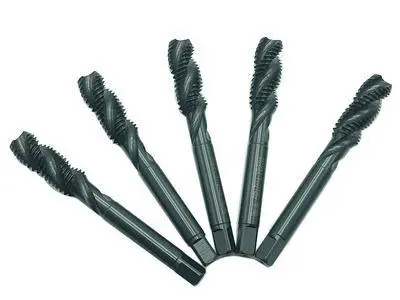
However, practical application often deviates from strict theory. Walk into any custom automotive shop or motorsports garage. You will quickly notice a distinct trend. Many field technicians default to a slightly larger "R" drill bit for this exact task. The "R" bit measures 0.339 inches. In fact, many commercial drill and tap kits intentionally package an "R" bit alongside their 1/8" pipe taps. You must understand the operational reality driving this choice. The 0.015-inch difference drastically reduces tapping friction. Less friction minimizes the risk of galling inside the hole. More importantly, it prevents the user from snapping a brittle cutting tool inside a highly valuable workpiece.
You can navigate this dilemma using a simple decision framework. Choose the "Q" bit for critical, unsealed gas and fluid lines where maximum engagement is non-negotiable. Pivot to the "R" bit when you apply heavy Teflon tape or liquid thread sealants. These modern sealing compounds easily bridge the minor dimensional gap created by the larger drill size.
Standard NPT relies heavily on a mechanical wedge effect to function. As you tighten the fitting, the tapered threads wedge together tightly. However, NPT threads do not naturally form a perfect, leak-proof seal on their own. They require external sealants like Teflon tape or pipe dope to fill the remaining spiral gaps. Because external sealants handle the final sealing phase, standard NPT proves highly forgiving. It readily accepts both "Q" and "R" drill bits. Your final choice depends entirely on the base material hardness. If the metal is hard, you can safely upsize to the "R" bit and let the sealant do the rest.
NPTF presents an entirely different set of rules. Engineers designed NPTF as a dryseal interference fit. This means the crests and roots of the threads must crush together physically. This crushing action completely eliminates spiral leakage paths without requiring any external sealants. Because of this strict mechanical requirement, NPTF applications offer zero tolerance for upsizing. You must use a "Q" drill bit. Furthermore, best practices dictate using a specialized taper reamer before running your thread tap into the hole. This ensures a perfectly uniform taper from top to bottom.
We should briefly contrast tapered profiles with NPS threads. NPS stands for National Pipe Straight. Unlike NPT, NPS uses a parallel thread structure. The threads themselves do not wedge together to create a seal. Instead, an NPS joint relies entirely on an external O-ring or a compression gasket. Because the physical geometry differs significantly from tapered designs, NPS requires an entirely different starting hole. To cut a 1/8" NPS thread, you must use an "S" bit (0.348").
Use the following summary chart to quickly reference drill sizes based on thread type. This table provides a clear mechanical baseline.
Thread Standard | Recommended Drill Bit | Size (Inches) | Sealing Mechanism |
|---|---|---|---|
NPT (Standard Taper) | "Q" or "R" | 0.332" / 0.339" | Wedge effect + external sealant |
NPTF (Dryseal Taper) | "Q" strictly | 0.332" | Interference fit (crest/root crush) |
NPS (Straight) | "S" | 0.348" | Parallel thread + O-ring/gasket |
Material hardness dictates how a cutting tool behaves under load. When you machine soft metals like aluminum, brass, or cast iron, the risk of tool binding drops significantly. These materials shear away easily. They produce manageable chips that evacuate well through the flutes of the tool. Because the physical resistance remains low, we strongly recommend sticking to the standard "Q" bit. Drilling a precise 0.332-inch hole in soft metals preserves the maximum thread profile. This approach maximizes joint strength without introducing unnecessary risks of tool breakage.
Hard alloys completely change the machining dynamic. When you cut stainless steel or titanium, you face severe risks. These metals cause rapid tool deflection and extreme localized overheating. They often work-harden as you cut them. This scenario commonly occurs during exhaust manifold sensor installations, such as fitting EGT thermocouples. Tapping a "Q" sized hole in 304 stainless steel frequently leads to catastrophic tool breakage. We highly recommend sizing up to the "R" bit here. You will experience a slight loss in thread percentage. However, this minor compromise is vastly preferable to extracting a broken high-carbon steel tool from a critical, expensive engine component.
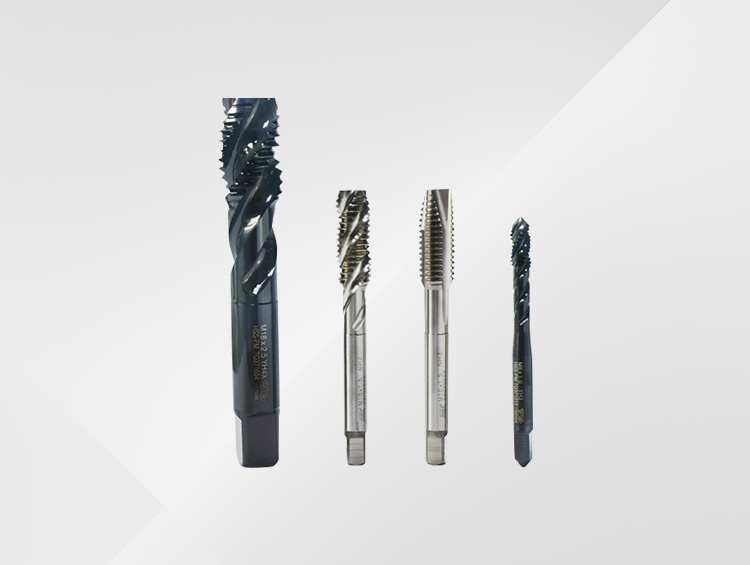
Tooling quality directly impacts your final thread integrity. You must evaluate the importance of tool material and physical geometry. High-Speed Steel (HSS) works well for general applications. However, Cobalt-alloyed tools perform significantly better in high-heat, hard-metal environments. You should also look for surface treatments. Black Oxide coatings retain lubrication effectively, while Titanium Nitride (TiN) drastically extends edge life. Finding the right geometry is equally vital. Partnering with a reputable thread tap manufacturer ensures you receive tools machined to tight dimensional tolerances. Exceptional manufacturing precision reduces your need to manually compensate using non-standard drill bits.
Pipe tools cut a massive amount of material compared to straight machine screws. Their tapered design forces them to engage more metal as they dive deeper. This action generates incredible friction. You must prioritize proper lubrication and chip evacuation. Always specify the mandatory use of high-quality, sulfur-based cutting fluids. A premium cutting fluid aggressively reduces friction heat. It also flushes away sharp chips before they can jam inside the flutes. Ignoring lubrication almost always results in severe thread tearing and ruined parts.
Tapered threads require strict depth control. If you tap too deep, you ruin the wedge effect entirely. The mating fitting will bottom out inside the hole before the threads actually seal. If you tap too shallow, the fitting will hardly engage. Follow a strict procedural framework to guarantee perfect depth every single time.
Mark the Tool: Identify the standard gauge line on your tool. This usually sits about halfway up the cutting flutes.
Cut Slowly: Drive the tool forward carefully. Break the chips every half-turn by reversing the handle.
Stop at the Line: Halt your downward progression once the gauge line sits flush with the workpiece surface.
Test the Fit: Remove the tool and clean out the chips. Hand-thread your final fitting into the hole.
Verify Engagement: The fitting should tighten by hand while leaving exactly two to three threads exposed above the surface. Adjust incrementally if necessary.
Before proceeding, review this quick checklist of common shop-floor mistakes. Avoiding these pitfalls ensures clean, leak-free results.
Common Mistake 1: Using WD-40 or motor oil instead of dedicated cutting fluid.
Common Mistake 2: Failing to reverse the tool to break off stringy chips.
Common Mistake 3: Driving the tool all the way to the shank, destroying the sealing taper.
Common Mistake 4: Using a handheld drill to drive the tool into hard metals.
Machining undersized holes introduces immediate operational risks. When you force a tapered cutting tool into a hole that lacks adequate clearance, friction spikes instantly. This generates severe, localized overheating. The cutting edges dull rapidly, and the flutes pack tightly with compressed metal chips. Eventually, the torsional stress exceeds the tool's shear limit. A broken tool lodged inside a valuable manifold or custom hydraulic block creates a major crisis. You then face expensive part scrapping. Alternatively, you must pay exorbitant fees for Electrical Discharge Machining (EDM) extraction services to burn the broken metal out.
Conversely, excessive oversizing carries delayed, hidden risks. When you drill a hole larger than an "R" bit, you severely reduce the thread bite. This lowers the minor diameter thread percentage below acceptable engineering limits. The joint might look fine visually. It might even pass a static pressure test if you use enough sealant. However, the connection remains highly vulnerable to vibration-induced backing out. In high-pressure hydraulic or pneumatic systems, vibration will slowly degrade the weak mechanical bite. This eventually causes cross-seal leakage, fluid blowouts, and potentially dangerous system failures.
Choosing the correct drill bit for a 1/8" pipe thread requires balancing strict engineering codes against practical machining realities. You cannot rely on a single answer for every scenario. Instead, you must assess your specific material and sealing requirements. Use the ultimate decision matrix to guide your process. First, default to the "Q" (0.332") size for strict ASME compliance and all NPTF dryseal applications. Second, pivot to the "R" (0.339") size when machining hard metals like stainless steel, or when utilizing heavy sealants in automotive builds. We highly encourage procurement and engineering teams to clearly specify their tooling requirements based on the final application environment. Doing so bridges the gap between the drafting table and the shop floor, ensuring leak-free performance and significantly reducing broken tools.
A: Mechanics sometimes use an 11/32" (0.3438") bit in a pinch for extremely hard materials. However, this size is technically oversized. It severely reduces your thread percentage. A joint cut this large relies heavily on thick sealants to prevent leaks. We do not recommend this size for pressurized or critical fluid systems.
A: For standard NPT utilizing a "Q" or "R" bit, a straight drilled hole works perfectly fine. However, high-precision NPTF (Dryseal) applications demand tighter tolerances. A taper reamer is highly recommended for NPTF to ensure uniform thread depth and guarantee perfect crest-to-root crushing without sealants.
A: The "1/8" designation confuses many beginners. It refers strictly to the nominal inside diameter (ID) of the pipe the thread is designed to carry. It does not refer to the physical outside diameter (OD) of the thread itself. The actual OD of a 1/8" pipe thread measures roughly 0.405 inches.


