
Views: 0 Author: Site Editor Publish Time: 2026-05-07 Origin: Site


The "3 thread rule" stands as a famous visual guideline in mechanical assembly. Many engineers rely on this quick check daily. They assume three protruding threads guarantee a secure joint. However, treating this visual heuristic as a universal law often causes serious problems. Blindly following it can lead to strict compliance issues, unnecessary material waste, or catastrophic joint failure.
Verifying true joint integrity requires moving far beyond simple visual rules of thumb. To build reliable systems, you must understand specific code requirements across different industries. We will explore how organizations like ASME and NEC define safe engagement. You will also learn the physics behind thread load distribution. Finally, we will show how controlling tolerances through high-quality tooling ensures long-lasting structural stability.
The Physical Reality: The rule exists because manufacturing processes (like thread rolling) leave up to two incomplete thread pitches at the bolt end; three protruding threads ensure the nut is engaged only with fully formed threads.
Code Compliance Varies: Industry standards override visual rules. ASME piping codes, NEC electrical codes, and RCSC structural guidelines have strictly defined minimums ranging from "flush" to "two threads."
Internal Thread Criticality: External protrusion is irrelevant if internal threads lack integrity. Using a high-precision screw tap is essential to meet the 75% thread engagement ratio required for optimal clamp load.
Engagement Limits: Over-protrusion (exceeding 5-6 threads) actively harms joint integrity by risking thread runout interference and torque loss.
Many technicians believe the three-thread requirement exists simply for easy visual inspection. In reality, the rule roots itself deeply in manufacturing physics. Most industrial bolts feature rolled threads. Thread rolling involves pressing a metal blank between massive steel dies. This process displaces metal rather than cutting it. Consequently, the rolling dies naturally create a slight cup-like deformation at the tip. The very end of the bolt tapers off slightly. This taper helps installers align the nut easily during initial assembly. However, it also means the final few pitches lack full structural thickness.
The Industrial Fastener Institute (IFI) acknowledges this manufacturing reality. IFI standards explicitly allow for up to two incomplete threads at the end of a fastener. These incomplete threads act as a lead-in. They cannot bear heavy structural loads safely. If a nut grips only these deformed pitches, the connection remains dangerously weak. The threads might shear off completely under high tension.
Understanding load distribution explains why clearing these bad threads matters so much. A fastened joint does not distribute tension evenly across all engaged threads. The first engaged thread inside the nut carries the highest percentage of the load. Engineering studies show this single pitch absorbs upwards of 34% of the total tension. The second thread takes about 23%. By the sixth thread, the load drops close to zero. Ensuring the nut passes the incomplete end threads guarantees a crucial outcome. It ensures the highest-stress area grips a structurally sound, fully formed pitch. Therefore, requiring three visible threads outside the nut safely positions the load-bearing zone inside.
While the three-thread concept offers a good baseline, strict industry standards often override it. Different sectors face unique environmental stressors. They write compliance codes addressing their specific failure modes. You cannot apply one visual rule across all engineering disciplines blindly.
The American Society of Mechanical Engineers (ASME) provides highly detailed mandates for pressure vessels and piping systems. Under ASME B1.1, the standard confirms the last effective thread appears about three threads from the end. This aligns closely with the general visual rule. However, piping inspectors must follow ASME B31.3 for process piping. This specific code requires visible penetration completely through the nut. If the bolt does not fully penetrate, the standard offers a strict tolerance. The unengaged portion cannot exceed one single thread. Anything shorter triggers an immediate inspection failure.
A common industry myth suggests electrical grounding connections must also show three protruding threads. The National Electrical Code (NEC) clarifies this misunderstanding. For grounding conductors and bonding jumpers, NEC 250.8 establishes a different baseline. The code specifically requires "not less than two threads" of engagement. Grounding screws do not endure massive structural tension. They primarily need adequate surface area to ensure electrical continuity. Forcing three threads in thin electrical panels often proves impossible and unnecessary.
Structural steel construction introduces another fascinating exception. The Research Council on Structural Connections (RCSC) manages guidelines for high-strength bolting. RCSC actually permits bolts to sit exactly flush with the nut face. They do not require any protrusion. When a bolt sits flush, it exposes the maximum number of threads in the grip area between the bolt head and nut. This exposure maximizes ductility. It allows the bolt to stretch safely under severe tension or seismic shifts. Demanding extra protrusion here could dangerously reduce the fastener's ability to stretch.
Regulatory Body | Application Area | Minimum Engagement Standard | Primary Engineering Goal |
|---|---|---|---|
ASME B31.3 | Process Piping | Visible penetration (max 1 thread short) | Prevent high-pressure blowouts |
NEC 250.8 | Electrical Panels | Not less than 2 threads | Ensure electrical continuity |
RCSC | Heavy Steel Construction | Flush with the nut face | Maximize bolt ductility |
General IFI | Standard Manufacturing | 3 threads protruding | Bypass incomplete rolled threads |
External protrusion provides a false sense of security if the internal threads lack structural integrity. Visual stick-out rules always assume perfect internal nut or tapped hole geometry. An inspector might see three perfect threads protruding from a machine block. Yet, the joint might still fail catastrophically under load. We must bridge the gap between external appearance and internal mechanical reality.
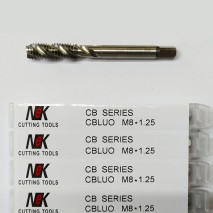
Creating robust internal threads requires exact tooling control. When machinists cut threads into a metal substrate, they rely heavily on specialized cutting tools. Using a high-precision screw tap becomes essential here. This tool carves out the internal helical grooves. It dictates whether the final hole meets strict Class 2B or Class 3B fit tolerances. A worn or imprecise cutting tool removes too much material. This leads to oversized pitch diameters inside the hole. When you drive a bolt into an oversized hole, the metal surfaces barely touch. This reduces the actual thread engagement percentage well below the safe 75% threshold. Even with proper external protrusion, the weakened internal ridges will shear off immediately under stress.
Blind holes introduce even more complexity. A blind hole does not break through the opposite side of the material. Therefore, protruding nuts are not an option for visual inspection. Engineers must calculate engagement depth mathematically.
Select the correct chamfer: Tooling geometry dictates thread depth. Bottoming taps cut closer to the hole floor than plug taps.
Calculate the unthreaded zone: Every cutting tool leaves a small unthreaded section at the very bottom. You must subtract this from your total hole depth.
Prevent bottoming out: If a bolt hits the unthreaded floor before the head clamps down, the joint remains loose. Torque readings will spike artificially.
Reliable joint design pursues one primary engineering goal. You must design the joint so the bolt fractures before the internal threads strip. A snapped bolt offers clear visual evidence of failure. Technicians can spot it immediately and replace it. Conversely, stripped internal threads hide deep inside the assembly. They fail silently. Repairing stripped machine blocks costs significantly more than replacing a broken fastener.
To achieve this fracture-over-stripping goal, engineers calculate engagement based on material strength. Different metals require different engagement depths to secure a hold.
Substrate Material | Relative Hardness | Minimum Engagement Rule | Example (1/2" Bolt) |
|---|---|---|---|
Steel (to Steel) | High | 1.0 to 1.5 times nominal diameter (1D Rule) | 0.50 to 0.75 inches |
Cast Iron / Brass | Medium (Brittle) | 1.5 to 2.0 times nominal diameter | 0.75 to 1.00 inches |
Aluminum / Soft Metals | Low | 2.0 to 2.5 times nominal diameter | 1.00 to 1.25 inches |
Engineers refer to these ratios as the "1D" or "2D" rules. When threading steel into steel, a depth equal to one bolt diameter usually provides enough shear area. The internal threads match the strength of the bolt. Soft metals like aluminum tell a different story. Aluminum yields easily under tension. Therefore, you must engage twice as many threads to distribute the load safely. You need a 2D or 2.5D engagement depth to prevent stripping.
However, you must recognize the principle of diminishing returns. Extending engagement beyond these calculated limits provides zero additional strength. Remember how load distribution works. The first few threads carry almost all the tension. If the first thread yields, the subsequent threads fail in a rapid domino effect. Adding an extra inch of thread engagement inside a steel block wastes manufacturing time. It will not stop the first thread from breaking under extreme overload.
If three threads are good, ten threads must be better. This dangerous assumption plagues many assembly lines. Over-protrusion actively harms joint integrity. Fastener standards usually cap maximum stick-out at 5 to 6 threads. Exceeding this limit triggers several mechanical failures.
Thread Runout Risks: Bolts do not feature threads all the way up to the head. They transition into an unthreaded shank. We call this transition zone the thread runout. If a bolt protrudes too far, the nut travels too far down the shaft. It may drive directly into the runout. This causes the assembly to seize violently before the plates actually clamp together.
Torque vs. Tension Illusion: Excessive engagement creates massive surface friction. Roughly 35% of all applied torque is already lost to standard thread friction. Driving a nut over ten extra threads increases this friction penalty dramatically. The tooling reaches its target torque prematurely due to heat and binding. The wrench clicks, but the clamping force remains dangerously low.
Installation Tooling Failures: Heavy construction relies on precise calibration tools. Excessive stick-out physically interferes with these devices. It blocks Direct Tension Indicator (DTI) washers from sitting flat. It also prevents Turn-of-Nut calibration tools from completing their necessary rotations. The deep sockets bottom out on the long bolt before tightening the nut.
Securing a mechanical joint starts long before the assembly line. It begins in the procurement office. Modern manufacturing demands shifting focus from simple visual inspections to rigorous quality control beforehand. Consistently passing inspection requires controlling tolerances before assembly begins. You cannot inspect quality into a bad tapped hole. You must machine it correctly the first time.
Evaluating your tooling suppliers prevents systemic assembly failures. Partnering with a reliable screw tap manufacturer ensures your internal threads match your high-grade bolts.
First, look for material-specific geometry expertise. Do they engineer cutting tools specifically for your substrate? Aluminum requires optimized flute designs to evacuate stringy chips. Hardened steel demands different cutting angles to prevent tool galling. A generic tool cuts generic holes.
Next, demand tolerance consistency. Aerospace and high-stress industrial applications require Class 3B fits. Look for manufacturers capable of holding incredibly tight pitch diameter limits consistently across large production runs. Variability in tooling directly causes variability in clamp loads.
Finally, insist on strict traceability and documentation. Global standards like ASME and ISO require rigorous compliance audits. Require partners that provide verifiable metallurgical and dimensional testing data. When an inspector questions your joint integrity, having certified tooling documentation proves your internal threads meet all code requirements.
The 3-thread rule serves as an excellent visual baseline for field inspections. It successfully ensures nuts avoid the structurally weak, incomplete threads located at a fastener's terminus. However, engineering a truly reliable joint requires evaluating the entire assembly ecosystem thoroughly. You must move beyond simple visual checks.
First, always prioritize specific industry codes. Standards like ASME, NEC, and RCSC carry legal and structural weight over general rules of thumb. Second, calculate material-specific engagement depths to ensure bolts fracture before internal threads strip. Avoid the dangers of over-engagement, which artificially spikes torque and ruins clamp load. Ultimately, the true foundation of joint integrity lies in smart procurement. Partnering with a vetted tooling manufacturer guarantees precise internal geometry. Specifying the correct class of fit ensures that when a joint passes visual inspection, its internal mechanics stand fully optimized to handle the designed load.
A: No. Blind holes rely on engagement depth (typically 1D to 1.5D for steel) rather than visual protrusion. Calculations must account for the unthreaded chamfer left by the tapping tool at the bottom of the hole.
A: Yes, but usually up to a maximum of 5 or 6 threads. Protruding beyond this risks driving the nut into the unthreaded shank (runout), which artificially spikes torque readings without applying clamping force.
A: Under NEC 250.8, the requirement is based on achieving adequate electrical continuity and mechanical bonding in specific panel thicknesses, rather than high-stress structural clamping loads.
A: In strict compliance environments (like ASME piping), using cut threaded rod is often prohibited because it lacks the manufacturer's identifiable grade markings on the end points, making structural verification impossible for inspectors.


