
Views: 0 Author: Site Editor Publish Time: 2026-07-02 Origin: Site


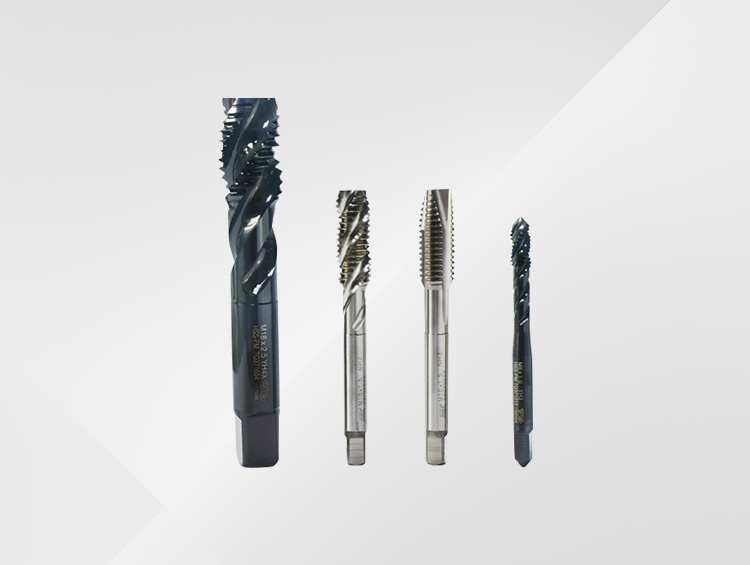
Machining alloy steel introduces high tensile strength, extreme thermal resistance, and severe abrasive wear. Materials like 4140, 4340, or 8620 routinely destroy general-purpose tooling. These tough metals demand specialized cutting geometries. A broken tool at the final stage of machining creates a massive headache. Complex components become scrapped parts instantly. Alternatively, you face labor-intensive EDM extraction. This extraction process wastes valuable production hours. Thread pitch and tolerance classes suffer heavily when cutting edges degrade.
This guide provides a rigorous technical evaluation framework. We help you select the precise thread tap for these demanding applications. You need predictable tool life across long production runs. You also need precise, repeatable thread tolerances. Scalable production operations require eliminating excessive machine downtime. You will learn how hole geometry dictates tooling designs. We explain why advanced substrates and high-performance coatings remain non-negotiable. You will also discover why optimized coolant delivery prevents catastrophic tool failure.
Hole geometry dictates the tap design: Blind holes require spiral flutes for upward chip evacuation, while through-holes benefit from spiral point (or tip tap) designs.
Substrate and coating are non-negotiable: High-Vanadium HSS-E or Powdered Metallurgy (HSSE-PM) featuring TiAlN or TiCN coatings are required to withstand the heat and shear forces of alloy steel.
Coolant delivery is as critical as the tool: Selecting taps featuring internal coolant channels significantly reduces the risk of chip packing and tool breakage in deep-hole applications.
Alloy steels present unique physical hurdles during the machining process. Hardness levels typically range between 25 and 40 HRc. These metals exhibit extreme toughness. They also demonstrate a severe tendency to work-harden during cutting operations. Work-hardening alters the material structure ahead of the cutting edge. Alloy steels contain chromium, molybdenum, and nickel. These elements create hard carbides inside the metal matrix. These carbides act like microscopic grinding wheels against your cutting tools. This makes chip formation highly unpredictable and extremely destructive.
Selecting the correct tool requires mapping specific technical features to concrete production outcomes. Let us examine edge preparation. A honed cutting edge prevents micro-chipping. It survives heavy, continuous cutting loads. Powdered metal substrates provide another critical example. They perfectly balance the extreme hardness of solid carbide against structural flexibility. You need this flexibility. It prevents catastrophic snapping inside the workpiece.
We must shift our evaluation metrics. Stop looking merely at the initial purchase price of a screw tap. Instead, measure the exact cost per threaded hole. Focus heavily on process predictability. Un-manned machining environments demand reliable tools. Machine operators cannot hover over every spindle. Dependable tooling protects your entire production schedule.

The physical type of hole dictates chip flow behavior. You must select your tool geometry accordingly. Applying the wrong geometry guarantees tool failure.
Through-holes allow metal chips to exit the bottom of the workpiece. We evaluate spiral point designs for this specific application. Many machinists refer to this style regionally as a tip tap.
The mechanical action is highly effective. An angular grind at the point shears chips aggressively. It then pushes them ahead of the cutting tool. This forward movement prevents flute clogging completely. It also minimizes dangerous torque spikes. Sudden torque spikes frequently cause tool breakage.
Blind holes trap chips inside a closed cavity. You need spiral flute geometries to extract them safely. We evaluate tools featuring 15° to 45° helix angles.
The mechanism lifts metal chips up and out of the hole. A slow helix angle (around 15°) works best for tougher, high-tensile materials. It maintains the thick core strength of the tool. A robust core resists the immense twisting forces generated by 4140 or 4340 alloys.
Common Mistake: Never use a high-helix (45°) design in materials harder than 35 HRc. The thin core cannot handle the shear stress. It will snap.
You must assess the viability of roll or forming taps. Forming displaces metal instead of cutting it. This creates exceptionally strong threads. It entirely eliminates chip management issues.
However, forming hard materials carries substantial risks. Forming requires highly precise pre-drilled hole diameters. A deviation of just 0.001 inches causes immense torque spikes. Forming works flawlessly for softer metals. We must clarify the hardness threshold for tougher alloys. Forming materials above 35 HRc becomes highly impractical. It puts massive radial strain on your machine spindle. It also dramatically reduces the lifespan of the tool.
Substrate and coating choices dictate performance. They determine tool survival against intense heat and abrasion.
Standard High-Speed Steel (HSS) fails quickly in these environments. It lacks the basic thermal resistance for long production runs.
Cobalt-alloyed High-Speed Steel (HSSE) sets a much better baseline. Powdered Metallurgy (HSSE-PM) represents the undisputed industry standard. You need HSSE-PM for an alloy steel tap. The PM process atomizes molten steel and compacts it. This eliminates carbide segregation. It creates a flawlessly uniform microstructure. HSSE-PM offers the perfect balance of wear resistance and toughness. The uniform grain structure prevents unpredictable micro-fractures.
Solid carbide remains highly wear-resistant. However, it is exceptionally brittle. It requires highly rigid, modern setups. Avoid using solid carbide on manual machines. Do not use it on older CNCs possessing loose spindles.
High-performance coatings protect the substrate. They defend against abrasive wear and extreme temperatures.
Titanium Carbonitride (TiCN) excels against abrasive wear. It handles standard alloy machining perfectly. It offers lower friction than uncoated tools.
Titanium Aluminum Nitride (TiAlN) provides superior heat resistance. You need TiAlN for high-speed threading operations. It forms an aluminum oxide layer during cutting. This layer shields the tool from intense thermal shock. It is critical for minimal quantity lubrication (MQL) setups.
Material / Coating | Wear Resistance | Toughness Level | Primary Application Focus |
|---|---|---|---|
Standard HSS | Low | High | Soft metals, non-production environments |
HSSE-PM | High | High | Alloy steel production runs |
Solid Carbide | Very High | Low | Highly rigid, precise CNC setups only |
TiCN Coating | Excellent | Moderate | Abrasive wear resistance, lower speeds |
TiAlN Coating | Maximum | Moderate | High heat, high-speed cutting applications |
Even the best cutting tool fails if implemented poorly. You must optimize your operating parameters.
Chamfer length dictates cutting force distribution. You must understand this essential tradeoff. Form B provides 3.5 to 5 threads of chamfer. Form C provides 2 to 3 threads. Form E provides 1.5 to 2 threads. Longer chamfers distribute forces over more teeth. This reduces the load on individual cutting edges. It extends overall tool life significantly.
However, short chamfers are strictly necessary sometimes. You need them when threading very close to the bottom of a blind hole. Use short chamfers only when component geometry explicitly demands it. The shorter the chamfer, the higher the chip load per tooth. They wear out much faster due to these concentrated forces.
Mismatching your tool holder creates severe manufacturing risks. Rigid tapping requires precise machine control. The spindle rotation and feed axis must synchronize perfectly.
We highly recommend collet chucks featuring micro-float capabilities. Axial compensation accounts for minor thrust deviations. This micro-float mechanism prevents the tool from snapping. It absorbs the sudden shock during the spindle reversal stage.
Evaluate the necessity of through-coolant capabilities. High-pressure internal coolant forces chips out effectively. It lubricates the cutting edges directly at the critical shear zone.
Best Practice: Maintain coolant emulsion concentrations strictly at 10-12%. High-tensile materials require maximum lubricity. Lean coolant mixtures will cause galling. Galling leads to rapid edge failure and torn threads.
You need a highly structured approach to finalize tooling choices. Random selection leads to inconsistent manufacturing results.
Look closely at the tool manufacturer. Traceability of substrates guarantees consistent quality control. Check for ISO 9001 certifications. Evaluate their ability to provide custom edge preparations. Ensure they offer strong application engineering support. You want a partner deeply understanding complex machining challenges. They should provide transparent testing data.
Do not roll out a new tool across the entire production floor immediately. Test it on a non-critical workpiece first. Protect your expensive production parts.
Measure specific metrics during the pilot phase:
Monitor spindle load percentages continuously during the cut.
Examine chip shape and evaluate evacuation efficiency.
Verify thread gauge compliance using certified Go/No-Go gauges.
Document the exact number of holes threaded before edge degradation occurs.
Consolidate your tooling inventory where possible. However, isolate specific thread tap part numbers strictly for harder alloys. Prevent cross-contamination. Aluminum and mild steel require entirely different edge geometries. Mixing tools leads to unpredictable failures. Keep your tough-alloy tools clearly marked and separated.
Selecting the correct tool for tough materials is an exercise in rigorous risk management. You must protect the expensive workpiece. You must maximize spindle uptime across all shifts.
Prioritize HSSE-PM substrates and advanced coatings like TiAlN to combat extreme heat.
Match tool geometry strictly to hole type. Use spiral point designs for through-holes.
Select slow spiral flutes exclusively for demanding blind hole applications.
Implement micro-float tool holders to reduce thrust pressure and extend tool life.
Audit your current scrap rates to identify problematic threading operations on your floor.
Consult an experienced tooling engineer to set up a controlled benchmark test.
A: We strongly discourage using standard HSS for production runs. Standard HSS suffers rapid edge wear and thermal degradation. This leads to broken tools and extremely poor thread finishes. You should always use HSSE or HSSE-PM substrates for tough materials. They handle intense heat much better.
A: These terms are largely synonymous in the machining industry. Both feature an angular grind at the tip. This grind shears and pushes chips forward. This mechanism makes them ideal for through-holes where chips exit the bottom safely without jamming.
A: Breakage is usually caused by chip packing or insufficient coolant lubricity. It also happens if the core is too weak due to a high helix angle. Switching to a low-helix spiral flute design featuring internal coolant usually resolves this issue quickly.
A: If your CNC machine has full synchronous capabilities, rigid tapping provides excellent depth control. However, adding a holder featuring slight axial compensation (micro-float) significantly extends tool life. It reduces immense thrust pressure on the chamfer during the spindle reversal phase.


